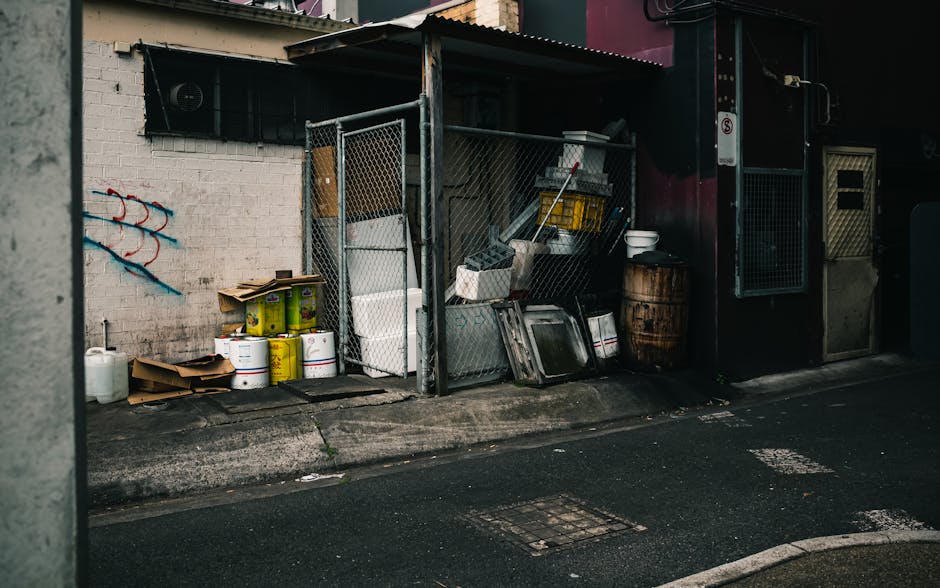
Permits for bulky waste in Hammersmith Council area: what you need to know before you book
If you are dealing with a sofa that will not fit through the front door, a broken wardrobe that has outlived its welcome, or a pile of household junk growing in the hall, you are probably asking the same question everyone else asks: do I need a permit for bulky waste in the Hammersmith Council area? It sounds like a small admin job, but it can quickly turn into a hassle if you book the wrong service, leave items out incorrectly, or assume the rules are the same everywhere in London. They are not always the same. This guide walks you through the practical side of permits, approvals, and what usually matters most when bulky items need to go.
We will keep it plain English. No waffle, no guesswork, just the things that help you make the right call. You will also find a step-by-step process, common mistakes, and a realistic look at when a permit is needed, when it is not, and what to do if you are not quite sure. A lot of people only realise the details matter when the collection day is already looming. Best to sort it now, really.
- Quick answer: most bulky waste situations come down to who is collecting, where the items are being left, and whether the waste is on public land or private property.
- Local reality: in a busy London borough, access, timing, and safety can matter as much as the items themselves.
- Practical takeaway: if the waste is not handled correctly, you can end up with delays, missed collections, or extra costs.
Expert summary: The safest approach is to confirm the collection method first, then check whether the council or your chosen waste service expects a permit, booking reference, placement rules, or special handling for larger items. That one check can save a surprising amount of time.
Table of Contents
- Why permits for bulky waste in Hammersmith Council area matters
- How permits for bulky waste in Hammersmith Council area works
- Key benefits and practical advantages
- Who this is for and when it makes sense
- Step-by-step guidance
- Expert tips for better results
- Common mistakes to avoid
- Tools, resources and recommendations
- Law, compliance, standards, or best practice
- Options, methods, or comparison table
- Case study or real-world example
- Practical checklist
- Conclusion
- Frequently asked questions
Why Permits for bulky waste in Hammersmith Council area Matters
Bulky waste is one of those things that looks simple from a distance and then gets messy very quickly. A mattress on the pavement may seem harmless enough. A fridge in a stairwell, less so. Once waste is being moved, stored temporarily, or left for collection, there can be rules about placement, access, timing, and responsibility. That is where permits or permissions can come into the picture.
In the Hammersmith area, the practical issue is usually not just the item itself. It is the setting. Narrow streets, shared entrances, controlled parking, red routes, basement flats, estate access gates, and busy footways all affect what can happen, where, and when. A collection that works perfectly on a quiet side street can be awkward on a main road at 8.30 in the morning. Truth be told, a lot of "bulky waste problems" are really access problems in disguise.
This matters because waste left incorrectly can cause safety issues, complaints from neighbours, and avoidable delays. It can also create confusion if you have hired help and everyone assumes somebody else has sorted the permissions. You will notice the difference when a job has been planned properly: fewer surprises, less back-and-forth, and a cleaner handover.
There is another reason it matters. Bulky waste often includes items that are heavy, awkward, or potentially hazardous if handled badly. Broken furniture with sharp edges, old electrical items, and damp soft furnishings all need a sensible approach. A permit, booking reference, or agreed collection method is not just paperwork. It is part of making sure the job is done safely and legally.
How Permits for bulky waste in Hammersmith Council area Works
Let us keep this practical. A "permit" in this context can mean different things depending on the collection route. Sometimes it is a council booking confirmation. Sometimes it is permission to place items in a communal or public area. Sometimes it is a parking or access arrangement that allows a collection vehicle to stop safely. The exact process depends on who is collecting the waste and where the waste is being placed.
For a resident, the process usually starts with identifying the type of bulky waste and how much there is. One chair is not the same as a full flat clearance. A single appliance may need a very different setup from three bulky wardrobes and a mattress. Small detail, yes, but it changes the logistics a lot.
Then comes the collection method. Some people arrange a council bulky waste pickup, while others choose a private clearance service. If the waste must be left outside, the collection point may need to be agreed in advance. If items are in a shared hallway or courtyard, building rules and fire safety concerns can also come into play. Nobody wants a pile of old furniture blocking the route out, especially in an emergency. That part is obvious, but people still forget it.
A sensible process usually looks like this:
- Identify the items and estimate the volume.
- Check whether the waste is from a home, a flat, an estate, or a commercial space.
- Confirm whether the collection will happen on private land or a public street.
- Ask whether a permit, booking confirmation, or access arrangement is required.
- Make sure items are placed where they can be collected safely and legally.
- Keep any confirmation details until the collection is complete.
If you are using a professional service, the company may handle some of this for you. But do not assume that means everything is covered automatically. It is still worth asking who is responsible for parking, loading access, and whether any council-related approval is needed. A quick question upfront can save a lot of faffing later.
Key Benefits and Practical Advantages
When permits or approvals are handled properly, the benefits are more practical than glamorous, but they matter. A well-managed bulky waste collection is less stressful, more predictable, and much less likely to cause a row with neighbours or building managers.
- Fewer delays: if access and placement are sorted first, the collection is less likely to be postponed.
- Better compliance: you reduce the risk of leaving waste in the wrong place or breaching building rules.
- Cleaner streets and shared areas: nobody likes seeing furniture left out overnight if it can be avoided.
- Safer handling: large items are easier to move when the route, parking, and lift access are all planned.
- Less confusion: everyone involved knows what is happening and who is doing what.
There is also a less obvious benefit: peace of mind. If you have ever tried to juggle keys, parking restrictions, a downstairs neighbour who is in a hurry, and a wardrobe that seems to grow heavier by the minute, you will know how quickly a simple job can become a small domestic drama. Sorting the permit side early removes most of that stress.
For landlords, managing agents, and tenants, the advantage is even clearer. Clear permission and properly arranged bulky waste removal helps avoid disputes over responsibility. That can be especially useful at the end of a tenancy, during flat refurbishments, or when clearing shared storage spaces. One tidy process beats three messages and two apologies, every time.
Who This Is For and When It Makes Sense
This topic matters to more people than you might think. It is not only for people clearing out a whole house. In fact, bulky waste permits or permissions are often most useful in ordinary situations where one or two awkward items need dealing with properly.
You may need to look at this if you are:
- a homeowner clearing out old furniture after a move;
- a tenant getting rid of a mattress, bed frame, or broken wardrobe;
- a landlord preparing a property between lets;
- a managing agent dealing with communal waste;
- a shop or office handling redundant fixtures;
- a contractor arranging post-renovation clearance;
- someone with limited access, such as a top-floor flat with no lift.
It makes the most sense when bulky items cannot simply be put in an ordinary bin. That sounds obvious, but people still try. Sofas, cabinets, mattresses, exercise equipment, white goods, and large broken fittings all need a separate plan. If the item is heavy, awkward, or likely to cause obstruction, it is worth checking the collection rules before moving it.
There is also the timing issue. If you are moving out on Friday and the property needs to be empty by Saturday morning, the permit or booking question becomes much more than admin. It becomes the difference between a smooth handover and a last-minute scramble. Not ideal, as you can imagine.
Step-by-Step Guidance
Here is a straightforward way to handle bulky waste in the Hammersmith area without overcomplicating it.
1. List every item clearly
Write down what needs to go. Be specific. "Furniture" is too broad. A sofa, two chairs, a chest of drawers, and one broken table give a much clearer picture. This helps with quoting, scheduling, and deciding whether permission is needed.
2. Check whether the items are private or shared responsibility
In flats and managed buildings, this matters a lot. Some items may be the resident's responsibility, while others might fall under building management or a landlord's arrangement. If you are unsure, ask before moving anything. That one conversation can prevent a lot of crossed wires.
3. Confirm the collection location
Will the waste be collected from inside the property, from the front garden, from a communal area, or from the kerbside? Each one has different practical implications. A front hallway may be fine for a quick removal, but a communal corridor can be a fire risk or breach building rules.
4. Ask whether a permit or booking reference is needed
This is the key step. If the collection involves public land, parking, or controlled access, permission may be needed. If the waste is going into a permitted collection service, make sure you have the reference or confirmation details. Do not rely on memory. Receipts and emails are much better than "I'm sure I saw it somewhere".
5. Prepare access in advance
Move smaller items out of the way, clear the route, and let neighbours or building staff know if needed. If there is a lift booking system, use it. If parking space is tight, confirm where the vehicle can stop. This is the part that saves the most time on the day.
6. Keep hazardous or sensitive items separate
Some bulky items may require special handling, especially if they contain electrical components, sharp glass, or potentially contaminated materials. If you are unsure, ask rather than guessing. It is better to pause than to create a problem that was never necessary.
7. Double-check collection timing
Morning collections can be calmer in some streets, while others are easier later in the day. It depends on local traffic and access. A collection that is fine at 10 a.m. may be awkward at school run time. That sounds obvious, but London traffic has a talent for making simple plans interesting.
Expert Tips for Better Results
The best results usually come from thinking one step ahead. Not ten steps ahead. Just one. Enough to avoid the obvious snag.
Tip 1: Measure large items before collection day. Doorways, stair turns, lift sizes, and tight corners can all matter. A sofa that looks fine in the room can become a comic nuisance halfway down the stairs.
Tip 2: Photograph awkward items. This helps when asking for advice or a quote. It also reduces misunderstandings about size and condition.
Tip 3: Separate recyclable items where possible. It does not always change the collection plan, but it can help with sorting and sustainability. If you are looking at greener disposal, the company's recycling and sustainability approach may also be worth reviewing in plain terms.
Tip 4: Avoid leaving items out too early. In busy streets, items left unattended can be moved, damaged, or complained about. Keep the wait short if you can.
Tip 5: Ask about insurance and liability. If a company is lifting bulky items through tight access, you want to know how they handle damage or accidents. Their insurance and safety information should give you a clearer picture.
Tip 6: Keep communication simple. One contact person, one booking note, one clear instruction. It works better than three different messages sent from the kitchen while the kettle is boiling.
And one more thing: if you are not sure whether something counts as bulky waste or something trickier, ask early. The question is never silly. The expensive mistake is assuming.
Common Mistakes to Avoid
Most bulky waste headaches come from a handful of avoidable mistakes. The good news is that they are easy to sidestep once you know what to look for.
- Assuming all collections work the same way: council arrangements, private removals, and estate rules can differ.
- Leaving items in the wrong place: a hallway, fire exit, or controlled street space may not be acceptable.
- Forgetting parking or loading access: this can delay the job before it even starts.
- Not separating special items: electrical goods and heavy furniture may need different handling.
- Booking too late: if you are moving house, leaving it until the final day is asking for stress.
- Not checking who owns the waste: this is a common issue in flats, HMOs, and shared properties.
One of the biggest mistakes is treating bulky waste as an afterthought. It rarely stays an afterthought. It ends up in the doorway, by the bins, or in the middle of a very busy morning. A tiny bit of planning saves a lot of noise, and a bit of embarrassment too, if we are honest.
Tools, Resources and Recommendations
You do not need a complicated toolkit to handle bulky waste properly, but a few simple resources make the process smoother.
- A tape measure: useful for checking doorways, stairwells, lifts, and item dimensions.
- A phone camera: ideal for recording item condition and awkward access points.
- Booking confirmation emails: keep them handy in case anyone asks for the reference.
- Property plans or access notes: especially useful for flats, offices, and managed buildings.
- A clear list of items: makes quotes and collections far easier to manage.
If you are comparing service options, think beyond price alone. The cheapest option can become expensive if the collection is delayed or the access plan is poor. A sensible provider should explain how they handle lifting, loading, timing, and any required permission. If you need a clearer idea of service scope, house clearance services may be relevant for larger or more involved jobs.
For straightforward household support, it can also help to understand the broader cleaning and clearance context. Pages such as deep cleaning or one-off cleaning are useful if bulky waste removal is only one part of a bigger property reset.
Law, Compliance, Standards, or Best Practice
Bulky waste is not just a convenience issue. It sits within a wider framework of waste responsibility, public safety, access control, and property management. You do not need to become a lawyer to deal with it properly, but you do need to respect the basic rules that apply in practice.
In ordinary terms, best practice usually means the following:
- waste should not obstruct pavements, entrances, or fire routes;
- items should be placed where they are authorised to be collected;
- hazardous or specialist waste should be separated and handled carefully;
- any permit, booking, or access approval should be followed exactly as agreed;
- collection vehicles should not create unsafe parking or loading conditions.
If the collection is taking place in a shared building, the building's own rules may matter as much as the collection provider's instructions. That can include delivery and collection times, loading bay use, lift bookings, and corridor protection. In practice, the safest approach is to treat the building manager's instructions as part of the process, not an optional extra.
There is also a practical duty of care angle. Waste should be transferred to a legitimate route, handled safely, and not dumped in a way that creates a nuisance. If a service is unclear about where the waste goes or how it is processed, ask. Good operators should be able to explain their method in plain language. No drama, just clarity.
Options, Methods, or Comparison Table
There are usually three common ways to deal with bulky waste in a borough like Hammersmith. The right one depends on urgency, volume, access, and how much help you want.
| Method | Best for | Advantages | Watch-outs |
|---|---|---|---|
| Council-style bulky waste collection | Standard household items and planned disposal | Simple for residents, usually well structured | May have booking windows, item limits, or placement rules |
| Private bulky waste removal | Urgent jobs, larger loads, difficult access | Flexible timing, more hands-on support | Costs can vary and access details matter a lot |
| Combined house clearance | Full or partial property clearances | Useful for multiple rooms or mixed waste | Needs clear instructions and item sorting |
If your waste pile is small and predictable, a standard collection can work well. If the staircase is narrow, the flat is on the top floor, or you are dealing with a tight deadline, private removal may be the calmer option. And if the place needs a full reset, a broader service such as end of tenancy cleaning can be the final step once the waste has gone.
Case Study or Real-World Example
A fairly typical example: a tenant in a Hammersmith flat had a broken bed frame, a sagging mattress, and a small chest of drawers to remove before checkout. At first glance it looked like a simple job. Then the details emerged. The building had a narrow communal hallway, the lift was small, and the street outside had limited stopping room during the morning peak.
Rather than trying to push everything out on the day and hope for the best, the resident checked the access points first, asked the building manager about collection timing, and arranged the removal for a quieter slot. The items were separated the night before, the route was cleared, and the collection team arrived with a clear handover plan. No one had to improvise in the corridor. No one was stuck waiting while a parking issue got sorted. Small win, but a real one.
What did that approach achieve? Fewer delays, less stress, and no awkward moment where someone is apologising to three neighbours at once. That is usually the real goal, isn't it?
Another common scenario is post-renovation waste. A couple clears out old shelving and broken furniture after fitting new flooring. They assume the waste can be left outside overnight, then realise the building has strict shared-area rules. By checking the permit or collection requirement early, they avoid a complaint and keep the hallway clear. It sounds basic because it is basic. But basic done well saves the day.
Practical Checklist
Use this before you book or move anything.
- List all bulky items clearly.
- Check whether the items are from a home, flat, office, or shared space.
- Confirm if the collection is from private land or public land.
- Ask whether a permit, booking reference, or access approval is needed.
- Measure large items and the route out.
- Check lift access, stairs, parking, and loading space.
- Separate any electrical, sharp, or unusual waste items.
- Keep booking emails or confirmation details accessible.
- Notify building management or neighbours if needed.
- Make sure the collection point is safe, legal, and clearly marked.
Final sanity check: if something feels unclear, pause and ask. Better a five-minute question now than a five-hour scramble later.
Conclusion
Permits for bulky waste in Hammersmith Council area are really about control, access, and doing the job properly. Whether you are clearing one awkward item or sorting a whole flat, the same principle applies: plan the collection, confirm the permission or booking requirement, and make sure the waste is handled in the right place at the right time. That simple approach helps you avoid delays, prevent complaints, and keep the process safe.
In a busy London setting, the smallest details can make the biggest difference. A clean route, a clear reference, and a few minutes of checking can turn a stressful job into a straightforward one. And that is worth doing properly.
Get a free quote today and see how much you can save.
If you would like to understand pricing, timing, and what a service might include, start by reviewing the available pricing and quotes. If you need to get in touch about a collection or a related property job, you can also use the contact page for the next step.
Frequently Asked Questions
Do I always need a permit for bulky waste in Hammersmith?
Not always. It depends on where the waste is being stored, how it is being collected, and whether the collection affects public space, parking, or shared access areas. In some cases, a booking confirmation or access approval is enough rather than a formal permit.
What counts as bulky waste?
Bulky waste usually means large household or office items that do not fit into normal bins. Think sofas, mattresses, wardrobes, tables, chairs, and large appliances. If it is awkward to move or too large for ordinary disposal, it probably falls into this category.
Can I leave bulky items on the pavement before collection?
Only if the arrangement allows it. Leaving items on a pavement or public area without the correct approval can cause problems. Always check the collection rules first, especially in busy or controlled streets.
What if I live in a flat with limited access?
That is exactly when planning matters most. Narrow stairwells, lifts, gated entries, and communal corridors can all affect the collection method. Measure access points and tell the provider about any restrictions before booking.
How far in advance should I arrange bulky waste removal?
As early as you reasonably can, especially if you are moving out or working to a deadline. A few days may be enough in simple cases, but complicated access or larger clearances often benefit from more notice.
Are electrical items treated differently?
Often, yes. Old TVs, fridges, washing machines, and similar items may need specific handling because they are electrical or contain components that should not be mixed with ordinary waste. Ask how they will be managed.
What should I do if I am not sure who owns the waste?
Check the tenancy agreement, building rules, or landlord instructions if relevant. In shared properties, ownership can be the tricky part. When in doubt, clarify before disposal so you do not end up paying for someone else's item.
Is a private bulky waste service better than council collection?
It depends on your situation. Private removal can be more flexible and quicker, while council-style collection may suit straightforward household disposal. The right choice usually comes down to timing, access, and the size of the load.
Can bulky waste be collected from commercial premises?
Yes, but commercial jobs often need more detailed planning. Access, loading time, and item type can all affect the process. Office furniture, retail fixtures, and clearance waste are usually handled differently from ordinary household items.
What happens if I put the items out too early?
They may cause an obstruction, attract complaints, or be moved before collection day. In some cases, leaving items out too early can also create safety or compliance issues. Keep the wait as short as possible.
Do I need to prepare the items before collection?
Usually, yes. Remove loose contents, separate items where asked, and make sure the route is clear. If a service asks for items to be grouped in a certain way, follow that instruction closely. It makes the job quicker and safer.
What is the biggest mistake people make with bulky waste?
Assuming that "someone else will sort it out". Access, permission, and timing all need an owner. Once that is clear, the rest of the job is much easier. A bit of ownership goes a long way, honestly.